

How Rocket Engines work with turbine Liquid Engines | Liquid
Propulsion
Today we are going to continue our
tremendous discussion on rocket science and rocketry and the last one we
evolved we talked about solid rocket motors and over there I promised in the
next one we are going to talk about liquid engines there we have talked about
where solid motors has to be used or what are their advantages also we have
talked about what are its limitations and those limitations my friends are
going to be filled by liquid engines today we are going to discuss a little bit
more complicated boosters a little bit more complicated system of propulsion
the liquid engines their various forms of liquid engines also for example earth
storable cryogenics semi cryo but we are going to understand the basic
mechanism of how this engines work
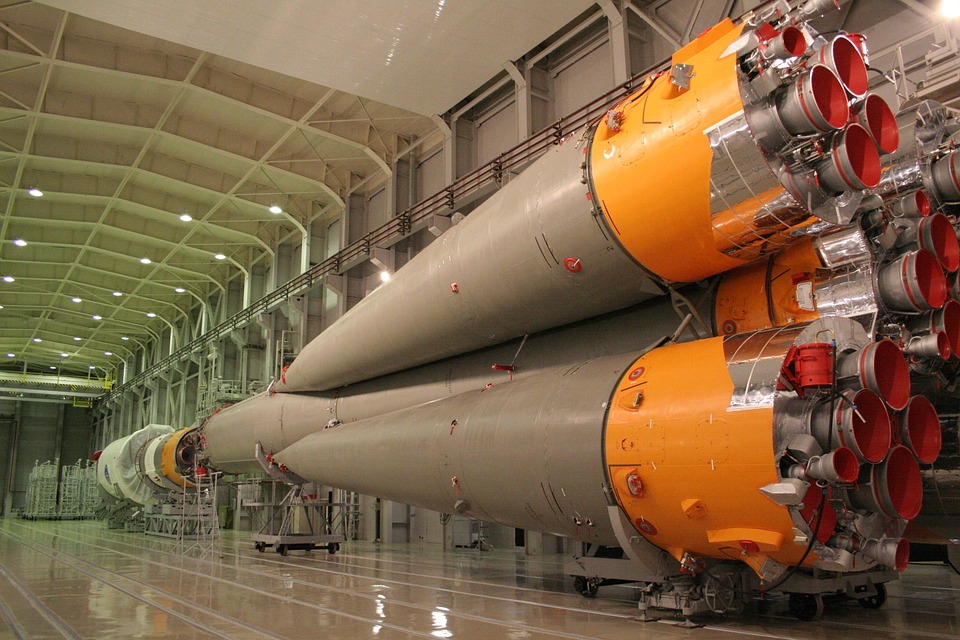
How this engines work
you
are going to understand very quickly that this is a little bit more complicated
looking at the pure engineering that is applied over here but I promise you
that it is going to be made as simple as possible and you’ll be able to
understand no matter what level of education you are having, all right the
principle of propulsion is very simple for propulsion you need combustion the
combustion of propellant will produce hot gas that hot gas has to be thrown out
with a very high velocity because of conservation of linear momentum
you are going to get a thrust to the
vehicle or launch vehicle in a linear direction so let us say we are having
something like m1 is our launch vehicle is carrying mass to of propellant right
and after combustion I need another marker after combustion this mass is going
to be thrown out with a velocity of V du and it will gain some velocity v1
ultimately V 1 M 1 will be equal to V 2 m 2 very simple as simple as it gets
but for this combustion we are not going to need a combustion chamber so I’m
going to make it simple for you guys this is my combustion chamber what is
happening over here as simple as it gets combustion for combustion what do we
need we need oxygen oxidizer
What is the need of oxygen oxidizer
we need fuel all right this fuel combines and maybe it burns as fast as it
combines or you need some external source like an igniter but the field with
just fuel but just burns in and when it gets in touch with the oxidizer it is
called hypergolic propellant alright so as soon as they combine they burn and
there are few engines that work like this but there are other engines that will
need a kind of external heat source and then again there are lot of forms of
liquid engines the earth storable liquid engines the cryogenic engines there
are semi cryo engines
concepts now how it works so I’ve given the oxidizer I’ve given the fuel and
let us say whatever happens that it requires there’s a combustion over here ok
alright I open a little bit of hole over here and I let this combustion go out
and it’s going to go out it’s perfectly fine but what if I can increase the
velocity as it goes out because the mass has to be lesser if I increase the
velocity to get the same linear momentum in the upward direction as we as we
know that the launch vehicle mass is going to be pretty high and the velocity
required belief the earth surface or to reach any orbit or to reach any other
celestial body is also going to be very high
high I’ll try my best to increase the velocity over there okay we know that by
conservation of mass if we decrease the area of cross section the velocity is
going to keep on increasing yes or no so the same mass has to travel through
lesser cross-section area so it has to travel faster if that does not happen
where is that mass going to go it cannot accumulate over here this is going to
burst if that happens right so that is what we call conservation of mass and
that is going to cause the increase of velocity
cross section area will cause increase of velocity only for subsonic flow and
at some point your flow is going to go supersonic and beyond that to increase
the velocity you need diverging section you have to study a little bit of gas
dynamics to understand that but take my word for it if you have diverging
section in supersonic flow that is Mach number greater than equal to zero then
you will need a diverging section to increase the velocity and in rocket
engines we definitely go supersonic
propellants because the rocket itself is flying at supersonic velocity after
some altitude so definitely this is obviously traveling at supersonic velocity
so this is what we call our nozzle and we are having the converging section
much shorter than the diverging section because of the reasons like flow
separation maybe we are going to discuss something like that later so we have
two components of a liquid engine so far what are they this is a combustion
chamber
nozzle right we are going to say a know set so we are having two very essential
component so we have actually produced the burn and also we have produced the
increase in velocity this might be sufficient for you to have propulsion are we
having a sufficient velocity at which the propellant is being yes are we having
the mixing of fuel and oxidiser yes yeah this might be a sufficient engine but
we want to increase its velocity at which it goes out what if what if I
increase the velocity at which I am giving oxidizer
increase the velocity at which I’m giving fuel won’t that be better because
this fuel and oxidizer it is mixing faster this combustion is happening at a
higher rate we are already increasing the velocity the thrust that we are going
to get is definitely going to increase so the next objective is to increase the
flow rate of these two that can be done by increasing the pressure at which it
is fed and mind you guys if you want to pressurize the flow if you already know
that combustion is taking place over here this is already going to produce a
very high pressure and it can go above 50 bar 50 times the pressure on top of
your head
you understand that the pressure at which it is being fed has to be higher than
that obviously flow happens because of pressure difference so if the pressure
over here is lower the flow will happen in this direction so the pumps yes we
are going to use pumps pumps are probably the only way to increase pressure right
there might be different forms of pumps but if you have to increase the
pressure of fluid you are going to need pumps so I’m going to assemble pumps
over here let us simplify that design we already know what these are we already
know combustion is going to take place again simplifying our thing
add a pump over here pump is going to look something like this and over here
also they’re going to be pump pumping the fuel pumping the oxidizer throwing or
both of them and a very high pressure so that combustion happens more rapidly
all right so these pumps are essential but who the hell are going to run this
pump because these pumps are going to be centrifugal so by centrifugal action
you can definitely increase the pressure the reciprocating pumps also it’s not
going to work over here because the reciprocating pumps are at a lot of cases
very dangerous also your heart is a kind of reciprocating pump
positive-displacement pump
lot of interesting things to discuss over here but just take my words there’s
going to be less appropriating pump that means there will be actually kind of a
wheel that is going to be churning the fluid increasing its pressure as it
moves through a section okay good we have to rotate this what are we going to
do hmm some driver can we add motor but motor running from some electric power
will not be as good because you have to carry a big battery then
also very heavy mass is the enemy of propulsion we cannot carry a large amount
of mass so what we do is that we have a mechanical rotating device we call it
prime mover so anything that is a source of power would be called prime mover
over here it is turbine yeah so this is a let us say a turbine okay turbine
pump and then there is a shaft going maybe different shaft maybe same shaft
maybe different velocity of this and this maybe same velocity of both the pumps
does not matter over here what we understand
that
we are able to produce rotation because of turbine and that rotation is going
to rotate the pumps that is going to increase the pressure of fuel and oxidizer
that is going to give us more rapid combustion isn’t it now next how are we
going to run the turbine because turbine is not going to run on itself we need
some power to run that turbine too can we use this combustion hmm that is a
good possibility because if we take a channel out of this and through the hot
gas that is what turbines work on turbines work on hot gases those hot gases
passes through
the
blades of the turbine and rotates the blades okay so for absolute beginners
just understand that there’s going to be blades you know to buy much more than
just for that I’ve shown over there but these blades when you throw hot gas and
gas sorry hot gas on it it is going to rotate if it has a pivoting point
alright because of this the whole thing is going to rotate the shaft coming out
will be connected to a pump and pump rotated because of the rotation of the
pump increase in pressure this has to be rotated for that we need hot gas
can
we take a line out yes we can but it is better if we have another combustion
device now this is another small combustion device that is going to produce hot
gas and it is also going to have a feed line of both fuel and oxidizer same
combustion is going on over here but probably at a much lower pressure probably
producing much lesser quantity of gas but it is only for the turbine by the way
this pump and turbine combination two pumps and one turbine combination
sometimes there are more pumps too but those are things that we are going to
discuss later if there’s some other fluid in
what
okay this is called a turbo pump okay this is called a gas generator on a pre
igniter depending on various kinds of combustion cycle alright so all you have
to understand right now that there is a combustion chamber there is a nozzle
which is going to increase the velocity there is a turbine which is going to
increase the flow rate of the fuel and oxidizer entry which is going to run the
pumps and this turbine has to be run by another combustion so how many
combustion ZAR going on right now one – is this the only way to increase the
pressure of the fuel
and oxidizer no there are other forms also
generally for larger engines for larger thrust producing engines we use turbo
pump system there are other pressure fed engines also for smaller engines and
that situation is very simple you will be having a pressurized gas very high
pressure 200-300 bar pressure that is just going to pressurize the fuel and the
oxidizer it is a much simpler system but it is not efficient when the size of
the engine is large when the thrust of the engine is large right so basically
basically we have our engine pretty simple huh so what we are having right now
we
are having an awesome one second we are having a nozzle we are having a
combustion chamber we are having a pump system the pump has to be run by
turbine the turbine has to be done by gas simulator or pre igniter something
like that pre combustion is happening over there and basically this is run by
again a closed-loop system
so there will be a closed loop that after
pumping this will be going that some of the and a fluid fuel and propellant
fuel and oxidizer will be bled over here and thus the pressure will increase
slowly and slowly okay initially the pressure will ramp up and then there will
be a stable region and that is again another thing when do you want to stop the
pressure because this is going to be designed for some pressure only alright
let us say 80 bar 80 bar pressure it is designed for so you have to have a
feedback mechanism that when you have already least 80 bar the supply of fuel
should decrease or should become stable and
the pressure that it is designed for okay so for that the other pressure
regulating measurement system sorry pressure regulating system which is going
to take feedback from the combustion chamber okay this is the pressure now we
should either decrease the supply of fuel because everything can be controlled
by the fuel and oxidizer supply or not yes if the pressure becomes too high
then we are going to decrease the form velocity if we decrease the pump
velocity the supply of the fuel
and
oxidizer decreases and if the pressure over air developed is not sufficient and
the thrust will not be sufficient then the feedback will go to some system
which is going to say that I need more fuel I need more oxidizer so that I can
produce more combustion so this velocity will increase all those feedback
mechanisms are also over there also any combustion is a reaction right and any
reaction should have a perfect mixture ratio
so the fuel and oxidizer is not always in
same mixture sometimes we use oxidizer rich mixture sometimes we use fuel rich
mixture but that mixture ratio therefore that only an engine is designed and
that has to be maintained also and all those things a moderator an and an
engine a lot of components but this is the basic way how your engine generates
power others are just the detail and don’t you worry my friends I’m going to
explain the details also but this is going to give you a basic idea you can
already understand it is already much more complicated
than
a solid rocket motor right and it is just we can call a silhouette of an engine
a liquid engine a lot of components also there is a fuel tank obviously on top
of it and to be honest if this is the engine this is going to be the stage
engine is going to be very small part of a stage and it is going to contain the
oxidizer and fuel fuel tanks and obviously other other control mechanism that
is basically going to be a computer over there processor will be there which is
going to continuously
monitor because once a launch maker lifts off
generally we do not have control it completely goes into its pre-programmed
manner and it follows the trajectory that it is designed for it is a
complicated device my friends and that is why we call it rocket science but it
starts with very simple combustion increase the velocity we increase the rate
of combustion we had pumps to run the pumps we add turbine to run the turbine
we add gas generator pre igniter and that has to be having a closed loop with
this only so slowly and slowly we’ll be ramping up the pressure of the
combustion chamber were you able to understand if
the
rate of combustion you have to add a pump or to pump if fuel and oxidizer are
having the separate pumps and that you will be having a turbine to run the pump
and then you’ll be having some igniter that is going to have a secondary
combustion to run the turbine alright I hope that I was able to explain it to
you also this works for most of the engines that we see SpaceX is having
completely liquid engines they saw all the 27 inches that you see on the lower
stage those are
all what are they they are liquid engines
only but they are semi cryo engines they are little bit advanced and both earth
storable and cryogenic engines a semi cryo why are they not using solid
boosters that’s a very good question I hope that some of you guys can answer in
the comment section and I’ll be replying to each and every one of you and in
the next one we will discuss why does SpaceX not use does not use solid rocket
motors and all the stages are liquid engines I think that after studying about
solid rocket motors in the last one and liquid engines in this one you’ll be
able to answer that